Peace and prosperity
Henry II succeeded peacefully to the English kingdom after Stephen's death on 25 October, 1154. After the long civil war the aristocracy was tired of fighting and ready to accept Henry, who, from the first, set out to restore the powers of monarchy. His policy was to rule as if Stephen's reign had not existed. He regards the kingdom as his legitimate inheritance through his mother Matilda from his grandfather Henry I and, therefore, set out to reclaim royal rights as they had been before 1135. Stephen's land grants were not respected, and royal lands and castles that had been taken over by barons were taken back by the king. Although this led at times to conflicts, all rebellions had been defeated by 1158.
The king took control over the Church immediately after his succession and supervised appointments to bishoprics as his grandfather had done. The kingdom's chief ecclesiastic, Archbishop Theobald of Canterbury, was, fortunately, a long-standing Angevin supporter and there were no difficulties with the Church before his death in 1162. Henry also made use of those of Stephen's followers who were willing to serve him. The capable Richard De Lucy, for example, shared control of the royal finances administered at the Exchequer.
All this was part of a general recovery and resumption of order.
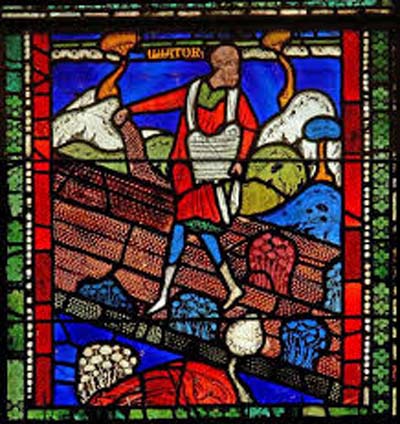
Cathedral, represents peaceful agriculture. |
Financial records from the first part of the reign show large areas of the kingdom unable to pay tax. Later records show returning prosperity helping to increase the government's revenue. The early years of Henry II's rule laid the foundations of the peace, widespread prosperity and well-organized government that is associated with the first of the Plantagenet kings.