|
A question of murderThe final act in the six-year conflict of wills between Henry II and Thomas Becket was as abruptly decisive as the conflict itself had been long and inconclusive. In 1170 a compromise was reached between king and archbishop. Becket could return to England, the confiscated property of the archbishopric would be returned, and Becket could re-crown the young king who had only weeks earlier been crowned by the archbishop of York. Nothing was said about the council meeting at Clarendon. On 1 December 1170, therefore, the archbishop return to England after his years in exile -- in a mood that was aggressive rather than conciliatory -- and excommunicated the archbishop of Yor and the two bishops who had assisted at the young King Henry's coronation. When the news reached Henry in Normandy, he flew into a violent rage, and four of his knights travelled to Canterbury to take a revenge so terrible that it is hard to believe the king would ever have contemplated it. |
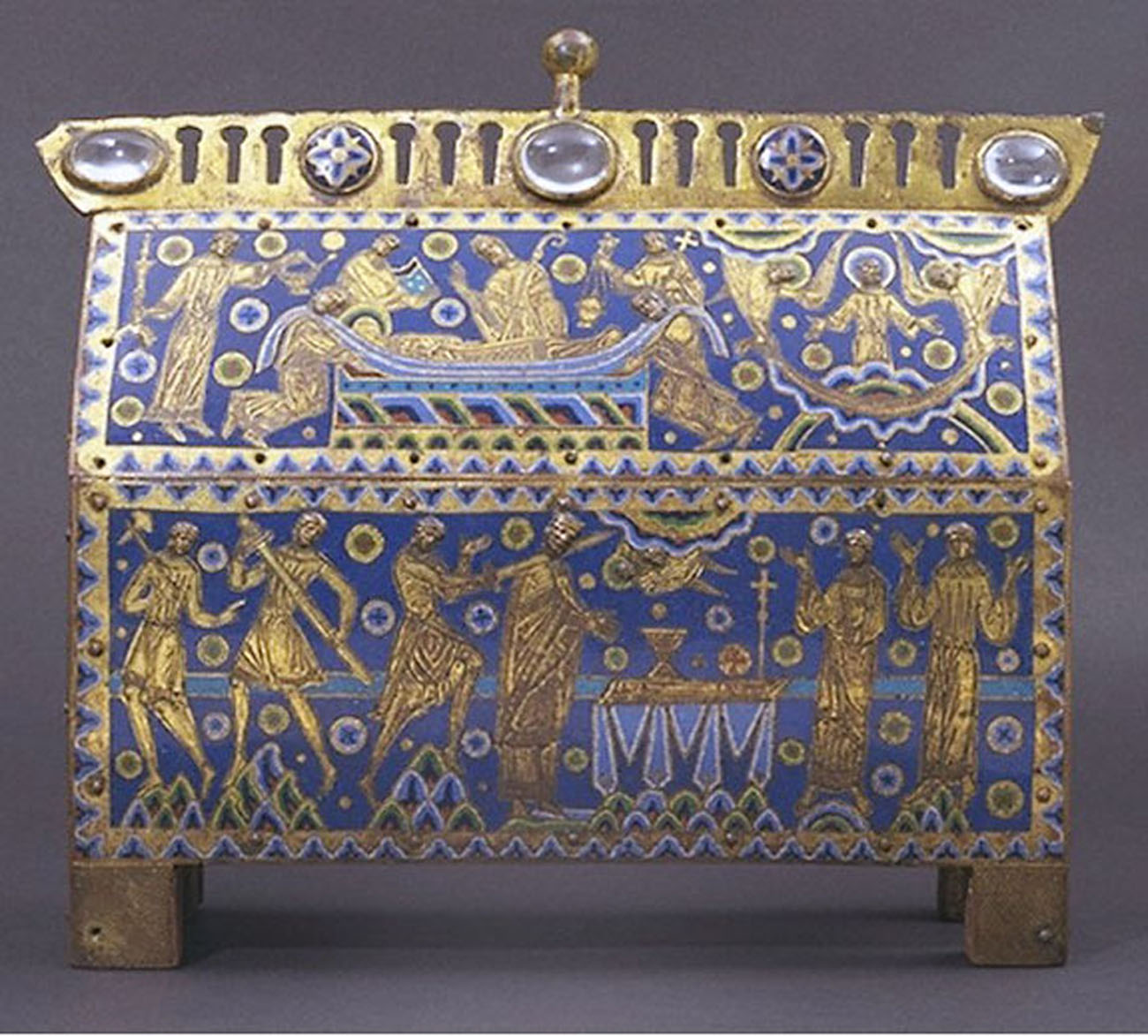
In the late afternoon of 29 December, the archbishop was assassinated in his own cathedral, provoking a tide of indignation across the whole of Europe. Becket dead was immeasurably more powerful that Becket alive. Within a few months many miracles were reported at his tomb; and less than three years after his death he was canonized by Pope Alexander III in February 1173. During the following year Henry II did public penance at his old enemy's shrine -- a shrine which rapidly became, and remained, one of medieval Christendom's principal pilgrimage centres. Not by nature a saint, Thomas Becket had become the most influential martyr in the history of the English Church. Below This casket, which contained relics of St Thomas, was made in Limoges in about 1190; the copper plaques are engraved and gilded, and laid over wood. |
|