England and Aquitaine
The Romanesque sculpture of western France, deeply undercut and exuberant with small monsters and grotesque figures, seems to have had an extraordinary appeal for the English. The elegant and distinctive arches of Aquitanean portals, with one beast or figure to each constituent stone (or voussoir), radiating out like flower petals from the archhead of the door, inspired the west portals at Rochester cathedral, and the doors of innumerable small parish churches in Yorkshire.
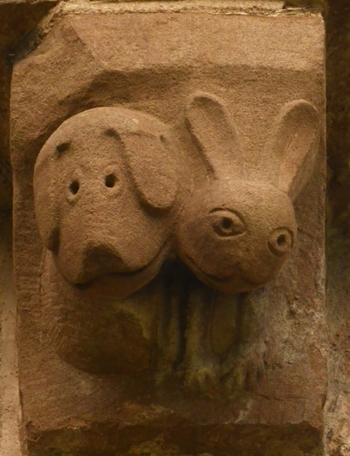
Although much of this was a result of the marriage between Eleanor and Henry and the cultural interchange that followed between Aquitaine and England, it is clear that the rich sculpture of Aquitaine had already struck an answering chord in the English imagination. In the 1130s, Oliver of Merlimond, a Herefordshire baron, had gone on pilgrimage to Santiago de Compostella in northwest Spain, travelling through Aquitaine. He must have had a sculptor in his retinue, who drew anything which impressed him on the way, to adapt for his own work on his return to Herefordshire. These new ideas were used at Merlimond's small Augustinian foundation of Shobdon, now decayed, and at the well-preserved and enchanting rural church at the Benedictine cell of Kilpeck. The finesse of the Aquitanean models, carved in the kind of ine limestone that must be a sculptor's dream, is lost in the more lumpen Herefordshire sandstone, but the copies have their own rustic and earthy charm.
Right The doorway to Kilpeck church.
Top Examples of corbels the innocent
animal faces (far right) seem out of place
near this female fertility symbol (near right).
Below Angel above the south door

|

|
|

|