|
|
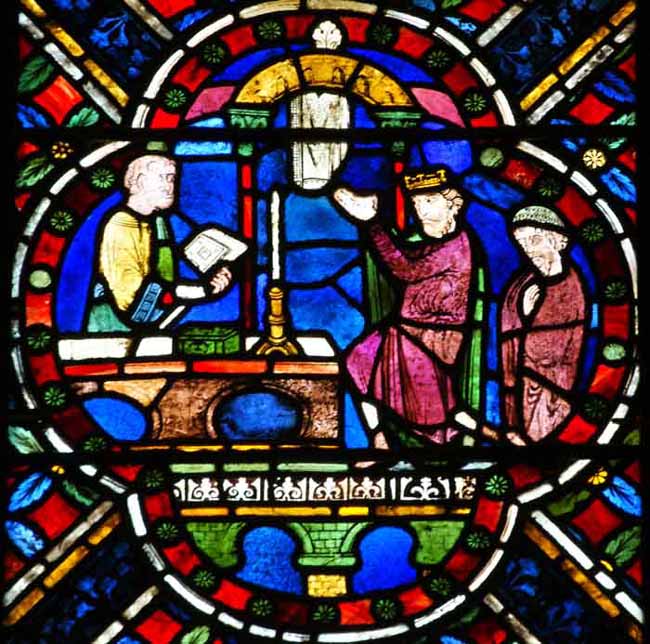
The price of repentanceThomas Becket was canonized by Pope Alexander III on 1 March 1172, and two months later the papal legates absolved Henry II of any part he might have played in the archbishop's murder. In return for his absolution Henry made some vagur concessions to the Church, and also promised to do public penance and to lead a Crusade to the Holy Land. However, although the king submitted himself to a public flogging before Becket's tomb in 1174 (an astute move politically as he was thereby seen to enlist the saint's help against his rebellious sons) he showed no intention of departing for Palestine. Instead, according to Gerald of Wales, in 1177 he founded three monasteries at minimal cost to himself: Waltham (Augustinian), Amesbury (Fontevraldine) and Witham (Carthusian). However Gerald continues, the Almighty would not be deceived by such a paltry, shamming effort. Henry certainly showed good business sense in founding monasteries to supply prayers for his soul: at Waltham and Amesbury he took existing priories, introduced new orders, added to their estates, and took full credit. But this approach to 'founding' was not unusual and contemporaries other than Gerald admired the king for removing nuns known to be scandalously corrupt from Amesbury and replacing them with the austere and cloistered sisters of Fontevrault. (Many people thought that the stricter the order, the more efficacious its prayers.) Gerald also ignored the numerous other monasteries Henry founded. Among these were a second priory for the Carthusians at Le Liget near Loches; several cells for the austere order of Grandmont, two Augustinian priories, one in Dublin dedicated to Becket, and another in Nottinghamshire; and several hospitals, including two for lepers at Angers and Le Mans. Above Small chapel at Le Liget, the Right Henry prays for forgiveness at Becket's tomb. |
Such largesse was expected of kings and had been taught to Henry by his mother, the Empress Matilda. In the early 1150s she had associated him with several Cistercian foundations which she established, after which he continued making foundations and donations, stepping them up to a far higher level after Becket's death. Despite his methods, Henry II was therefore far more open-handed to the monastic orders that his predecessors or his contemporaries; his generosity to monks makes him on of the most munificent of all the Plantagenet kings.
|