|
The art of worship
Twelfth-century mainland Italy falls into four artistically distinct regions: Rome, Tuscany, Venice and Lombardy.
Rome's art was conservative and its new churches, like Santa Maria in Trastevere, with its slender columns and wooden roof, could have been built at any time during the previous ten centuries.
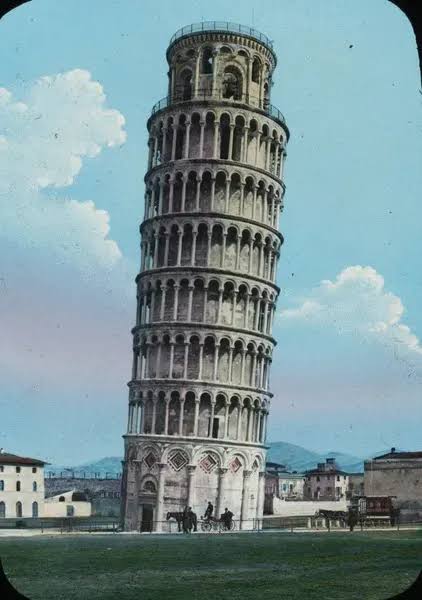
Tuscan architects, centred on the rich trading cites of Pisa and Lucca, were scarcely more enterprising. Pisa cathedral, however, begun in the 11th century and still under construction in the 13th, is a splendid, double-aisled building, encrusted inside and out with multicoloured marble. Its west front has a series of elegant, arcaded passages, one above the other, like a many-tiered wedding cake. Pisa, like many Italian cathedrals, follows the early Christian tradition of a cathedral complex with separate baptistry and bell tower.
In Venice, San Marco, originally the chapel of the ducal palace, was begun in 1063 and finished in the

|
|
1150s. It was build on the 'Greek cross' plan with its have the same length as the transepts and eastern arm. Crowned by five domes, and with splendid mosaics, it might almost be in Constantinople and was undoubtedly built by Byzantine artists. The most interesting artistic developments were in the politically active cities of northern Italy -- Milan, Parma, Pavia, Modena and Verona -- where architecture was valued for its own sake, and not swamped under sheets of marble or mosaic. Here, throughout the 12th century, a series of brilliant sculptors develped a new, lively, narrative style. While French sculpture concentrated on religious themes, and drew its power from an intense spirituality, Italian sculptors remained closer to reality. They loved to produce jovial, secular scenes, like the Labours of the Months, carved in the capitals of Ferrara cathedral, and even their religious figures have a certain earthy corporeality. Italy and its Roman heritage were of immense significance to the rest of Europe. In the 1140s, Bishop Alexander of Lincoln commissioned a frieze, to be modelled on one at Modena by Willigelmo, for the façade of his cathedral. Henry of Blois bought antique sculpture in Rome. Abbot Suger, in imitation of Italian churches, had a mosaic set into the west front of Saint-Denis. Needless to say, it did not stand the test of the inclement north European weather. |
Left The bell tower at Pisa was begun in Above St Ambrose in Milan is dedicated to Below A richly decorated mosaic at San Marco in Venice, showing the Creation.
|
